
How AI Agents and Automation for SEO Work: An Expert Breakdown for AI Search Visibility
AI agents and automation for SEO are autonomous or semi-autonomous systems that run multi-step workflows—researching opportunities, generating and evaluating content, and pushing updates—so brands can stay visible in both traditional search and AI answers. In 2026, “SEO visibility” also means being cited in ChatGPT, Perplexity, Claude, Gemini, Google AI Overviews, and Google AI Mode, so success must be measured with citation frequency, sentiment, freshness, and competitive benchmarks.
Last updated: April 7, 2026
1. What are AI agents and automation for SEO?
AI agents for SEO (autonomous or semi-autonomous software operators) execute chained tasks—plan, act, check, and iterate—across tools like Google Search Console (site performance data), Semrush (keyword intelligence), and WordPress (CMS publishing). Unlike a single ChatGPT prompt, an AI agent can ingest data, propose actions, validate constraints, and then implement changes via APIs or human approval steps.
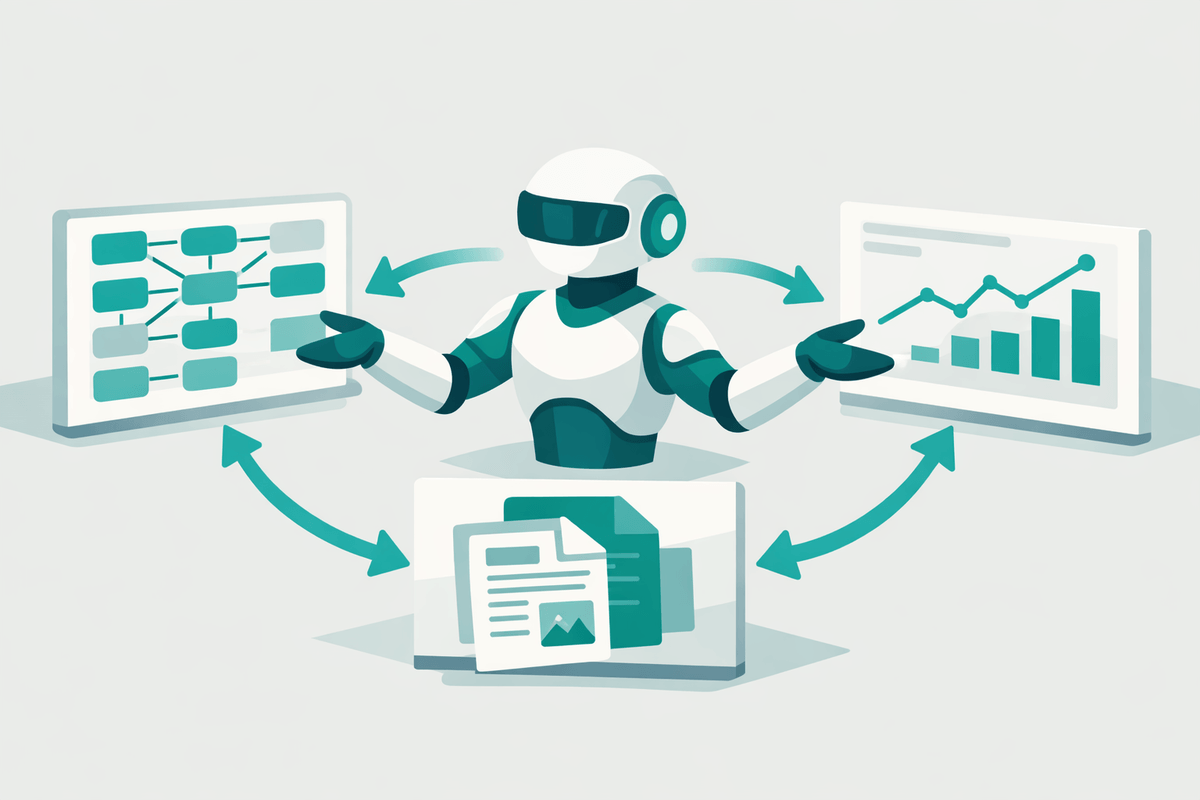
A practical definition: SEO automation is any repeatable workflow that reduces manual effort, while an AI SEO agent adds reasoning, prioritization, and adaptive decision-making. Synscribe reports that AI SEO agents can fully automate six categories of SEO execution, with three additional categories requiring human oversight for best results (as of 2026) (Synscribe).
For a current industry view of agent architectures and capabilities, see MEGA SEO’s 2026 guide (MEGA SEO) and Nightwatch’s best-practice overview (Nightwatch).
2. How do AI agents improve SEO automation workflows across research, content, and reporting?
AI agents improve SEO workflows by compressing cycles that used to take days—research, drafting, QA, and reporting—into repeatable “runs” with logs and checkpoints. In keyword research, ALM Corp notes that agents can identify striking distance keywords (positions 7–15) by analyzing thousands of variants in minutes using semantic clustering (as of 2026) (ALM Corp).
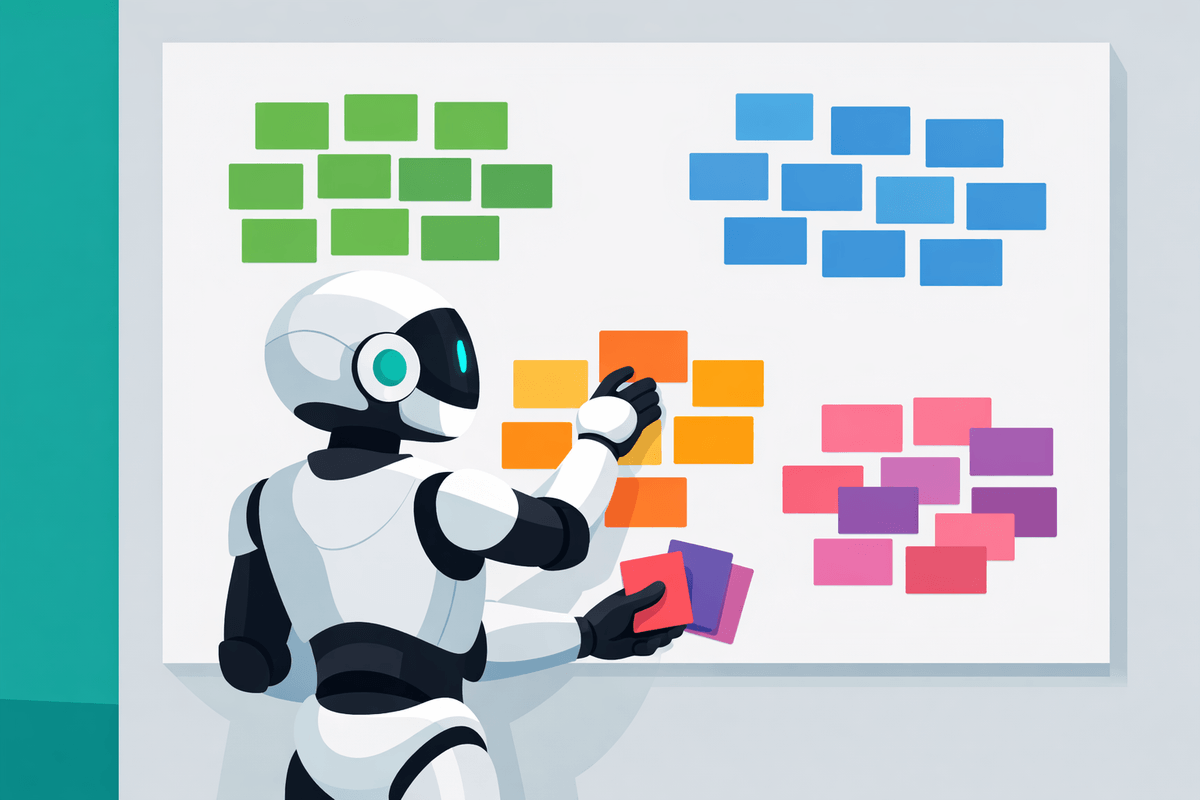
In content operations, an agent can: pull entities from Wikipedia (entity definitions), compare SERP intent in Google, draft a brief, generate sections, and then run factual checks against first-party sources like product docs. In reporting, ALM Corp also reports 24/7 monitoring for ranking fluctuations, traffic patterns, Core Web Vitals, competitor movements, and algorithm update impacts with real-time alerting (as of 2026) (ALM Corp).
For platform-specific workflow implications, especially for citation-heavy engines, read Perplexity AI's impact on SEO automation workflows.
3. AI agents vs traditional SEO automation: the key differences that matter for AI search visibility
AI agents differ from traditional SEO automation because they can make conditional decisions, not just execute rules. A classic automation (e.g., scheduled rank tracking in Ahrefs) reports metrics; an agent can detect a drop, diagnose likely causes (intent shift, competitor rewrite, internal link decay), propose fixes, and open a Jira ticket with recommended copy and schema changes.
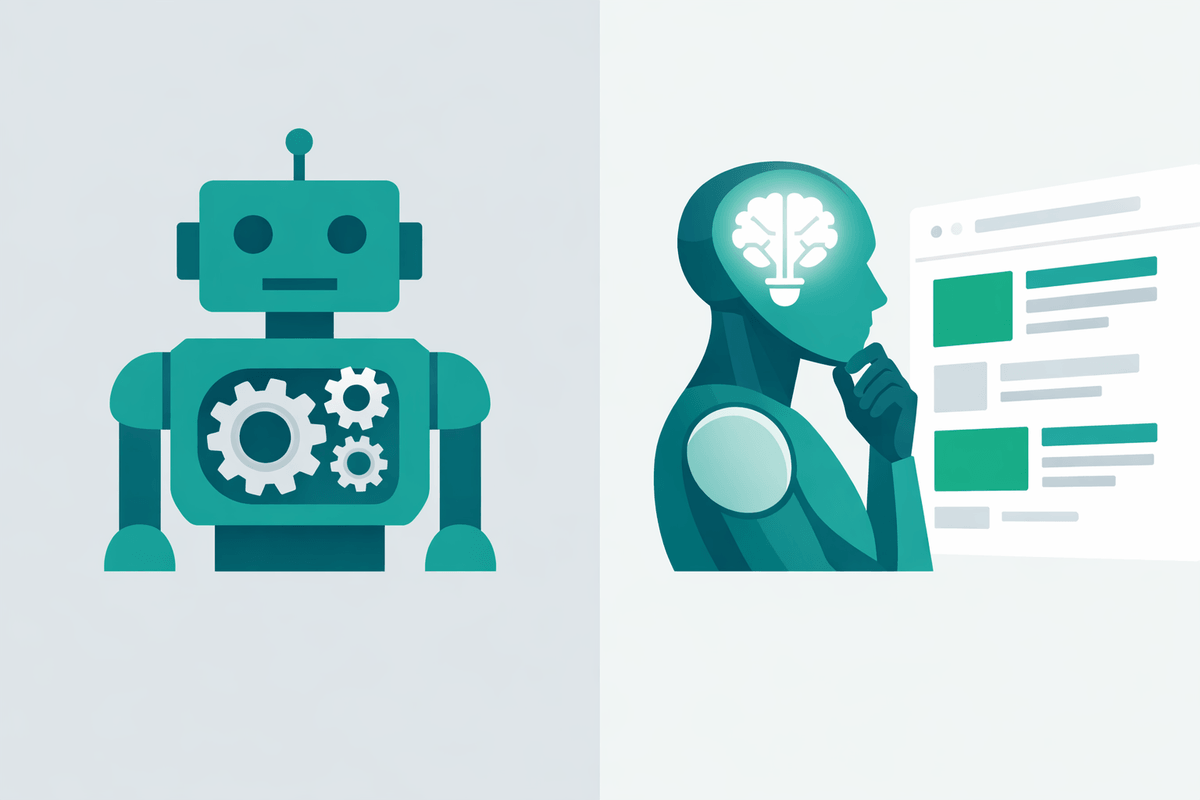
This difference matters because modern visibility includes generative engines—ChatGPT, Claude, Gemini, and Google AI Overviews—where answers cite only a handful of sources. An agent must optimize for “citable chunks” (self-contained sections, definitions, tables, and FAQs), not only for rankings. Nightwatch describes AI SEO agents as combining real-time data integration and full workflow automation beyond chatbots (Nightwatch), while Geeky Tech emphasizes that strategy and customization still require humans (Geeky Tech).
For Claude-specific constraints and source selection patterns, use Optimizing SEO with Claude AI automation tools as a companion reference.
4. Why Generative Engine Optimization changes how AI agents should be used for SEO
Generative Engine Optimization (GEO) (optimizing content to be selected and cited in AI-generated answers) changes AI agent design because the objective function is broader than “rank + click.” GEO asks: will ChatGPT, Perplexity, Claude, Gemini, Google AI Overviews, and Google AI Mode extract and trust a section enough to cite it?
That pushes agents toward citation-friendly transformations: adding dated statistics, inserting attributed expert quotes, defining entities on first mention (e.g., Retrieval-Augmented Generation (RAG), a web retrieval method for LLMs), and structuring question-led H2 sections that match query fan-out. MEGA SEO summarizes the modern agent stack as a combination of LLMs, specialized SEO models, data pipelines, knowledge graphs, and execution frameworks that can interact with CMSs and servers (MEGA SEO).
A well-built agent combines LLMs for content generation, analysis, and strategic reasoning with specialized SEO models trained on ranking factor data and SERP patterns, real-time data pipelines connecting to search APIs and analytics platforms, knowledge graphs mapping your site's content topology and competitive landscape, and execution frameworks that can interact with CMSs, CDNs, and web servers.
For deeper implementation guidance, use Generative Engine Optimization strategies for AI-driven SEO.
5. What tasks should businesses automate first with AI agents for content optimization?
The highest-ROI starting point is automating repetitive, high-volume, low-risk tasks while keeping humans on positioning and accuracy. For B2B SaaS teams using HubSpot (marketing automation), Webflow (CMS), or WordPress (CMS), a safe first wave includes: internal link suggestions, content refresh detection, schema drafts, and FAQ generation aligned to sales objections.

A second wave is “agent-assisted editorial”: generating outlines, entity lists (products, standards, competitors), and snippet-ready definitions for each section. Datagrid highlights that agents can process massive datasets to spot optimization patterns and adapt to algorithm changes (as of 2026) (Datagrid).
When teams adopt GEO, automation should explicitly add citable elements: current stats with dates, expert attribution, and structured sections. Oltre AI (a Generative Engine Optimization platform) operationalizes this by scanning how engines like ChatGPT, Perplexity, Claude, Gemini, DeepSeek, and Grok currently perceive and cite a site, then recommending targeted updates such as statistics, quotes, structured data, and question-based sections; WordPress and GitHub sites can be updated automatically, while other stacks receive implementation instructions.
6. AI agents and automation for SEO deliver the best results when human oversight defines strategy, accuracy, and brand authority
Hybrid execution is the durable model: AI agents accelerate throughput, while humans own strategy, factual validation, and brand differentiation. In B2B categories (e.g., cybersecurity, payments, HR tech), a wrong claim about SOC 2 (security compliance standard) or GDPR (EU privacy regulation) can damage trust and reduce citation eligibility in Google AI Overviews and Gemini.
Geeky Tech states the core governance principle clearly:
This hybrid model ensures that while AI tools for SEO automate many tasks, human insight remains indispensable for strategic decision-making and customisation in SEO and content.
Human oversight should include: (1) entity positioning (how your brand relates to Gartner categories, G2 alternatives, and competitor names), (2) claim verification against primary sources, and (3) editorial standards (tone, compliance, and differentiation). This is also where teams decide whether to optimize for citations in ChatGPT versus Claude, which can pull from different indexes and authority sources.
7. Data comparison: which SEO tasks benefit most from AI agents, human experts, or hybrid workflows?
The fastest gains come from assigning the right work to the right “executor.” AI agents excel at breadth (many pages, many queries), humans excel at judgment (positioning, narrative, risk), and hybrid workflows win when tasks require both speed and accountability. ALM Corp notes agents can perform competitor analysis that would take analysts days or weeks, including SERP monitoring, content reverse-engineering, backlink analysis, and snippet opportunity detection (as of 2026) (ALM Corp).
AI agents conduct sophisticated competitor analysis that would take human analysts days or weeks to complete manually, including real-time SERP monitoring, competitor content strategy reverse-engineering, backlink profile analysis, and feature snippet opportunity detection.
| SEO task | Best owner | Why it fits | Primary KPI |
|---|---|---|---|
| Striking-distance keyword discovery | AI agent | Fast semantic clustering | Pages moved 7–15 → top 5 |
| Topic positioning & differentiation | Human | Category narrative control | Win rate vs competitors |
| Content refresh detection | AI agent | Monitors decay signals | Freshness cadence met |
| Claim verification & compliance | Human | Accountability for truth | Error rate, legal risk |
| Schema drafts (FAQPage, Article) | Hybrid | Agent drafts, human validates | Rich result eligibility |
| Citation-ready rewrites | Hybrid | Agent speed, human authority | Citation frequency |
For additional agent patterns and pitfalls, compare perspectives from MEGA SEO (2026) (MEGA SEO) and ALM Corp (2026) (ALM Corp).
8. How B2B teams can measure AI search visibility and AI citation tracking performance
Measuring AI search visibility requires metrics beyond rankings and sessions because many AI journeys are “zero-click.” A B2B measurement stack should track: citation frequency (how often the brand/domain is cited), citation share versus competitors, sentiment (positive/neutral/negative framing), freshness (how recently cited pages were updated), and assisted conversions (pipeline influenced after an AI mention).
| Metric | What it answers | How to operationalize | Best review cadence |
|---|---|---|---|
| Citation frequency | Are AIs citing the brand? | Track by query set and engine | Weekly |
| Competitive citation share | Who “owns” the answer? | Benchmark vs 3–5 rivals | Monthly |
| Sentiment of mentions | Is the brand framed well? | Classify mention tone | Weekly |
| Freshness / update lag | Is content current enough? | Days since last update | Biweekly |
| AI-assisted conversions | Does visibility impact revenue? | Attribution notes in CRM | Monthly |
To implement measurement, start with a stable query portfolio (category terms, competitor comparisons, integration queries) and run it across ChatGPT, Perplexity, Claude, and Gemini on a set cadence. Practical playbooks include KPIs and benchmarks for measuring AI search visibility and AI citation tracking methods for content marketing. For ChatGPT-specific tactics that influence citations, use Strategies to get cited by ChatGPT in AI-powered search.
Oltre AI supports this workflow with AI Citation Tracking dashboards that monitor citation frequency, sentiment, competitive benchmarking, and traffic from high-value AI mentions, helping B2B teams connect optimization work to pipeline outcomes.
For global teams, localization also matters because engines vary in how they weight local sources. Use Geo-targeting strategies for B2B marketing and SEO to align AI visibility goals with market-by-market content plans.
FAQs
How much can AI agents reduce the time spent on SEO research and monitoring?
AI agents typically cut research and monitoring time the most because they can run continuously and analyze large keyword and competitor datasets quickly. ALM Corp reports agents can monitor rankings, traffic patterns, Core Web Vitals, competitor movements, and algorithm update impacts 24/7 with real-time alerting (as of 2026).
What’s the difference between an AI SEO agent and using ChatGPT for SEO prompts?
An AI SEO agent runs multi-step workflows with data inputs, decision rules, and actions across tools like Google Search Console, a CMS, and analytics platforms. ChatGPT prompting is usually single-step generation. Agents can also validate constraints, log actions, and trigger updates or tickets, which improves repeatability and governance.
Which SEO tasks should not be fully automated with AI agents?
Do not fully automate brand positioning, high-stakes factual claims, or regulated content (for example, GDPR or SOC 2 statements) without human review. These tasks require accountability, source verification, and nuanced differentiation. Hybrid workflows work best: agents draft and propose changes, while humans approve final claims and messaging.
How do you measure whether AI agents are improving AI search visibility, not just rankings?
Measure citation frequency, competitive citation share, and sentiment across engines like ChatGPT, Perplexity, Claude, and Gemini, then connect those signals to assisted conversions in your CRM. Also track freshness (days since last update) because newer, well-sourced pages are more likely to be cited in generative answers than stale content.
How long does it take to see improvements in AI citations after updating content?
Early citation changes can appear within days for engines with frequent crawling and retrieval, but durable gains usually require several update cycles. Most teams see clearer trends after 4–8 weeks of consistent refreshes, query-set testing, and competitive benchmarking, because citations rotate and different engines prioritize different sources.