
What Google's March 2026 Core Update Means: Expert Breakdown for Adapting Your SEO and GEO Strategy
Google’s March 2026 Core Update is best evaluated as a retrievability shift: it changed which pages Google trusts to extract, summarize, and rank across classic Search and AI-driven surfaces. Teams should diagnose losses, refresh key pages for freshness and semantic completeness, tighten entity clarity, and add structured data. In parallel, build citation-ready formatting for AI Overviews, AI Mode, Gemini, ChatGPT, Claude, and Perplexity.
Last updated: 2026-04-08
1. What changed in Google's March 2026 Core Update?
Google began rolling out the March 2026 Core Update on March 27, 2026 at 2:00 AM PT, positioning it as a broad quality recalibration rather than a narrow spam tweak (Search Engine Journal). Google described it as:
"A regular update designed to better surface relevant, satisfying content for searchers from all types of sites."
The rollout took 12 days to complete (2026) (Search Engine Land), and volatility was widespread: 55% of tracked sites saw ranking changes within two weeks (2026) (Digital Applied). In practice, winners tended to show stronger E-E-A-T (Experience, Expertise, Authoritativeness, Trustworthiness), clearer topical coverage, and better technical readiness for extraction (e.g., clean headings, fast templates). Losers often showed scaled, low-differentiation pages that added little information gain.
2. Why the March 2026 Core Update matters beyond rankings: AI search visibility, citations, and discovery
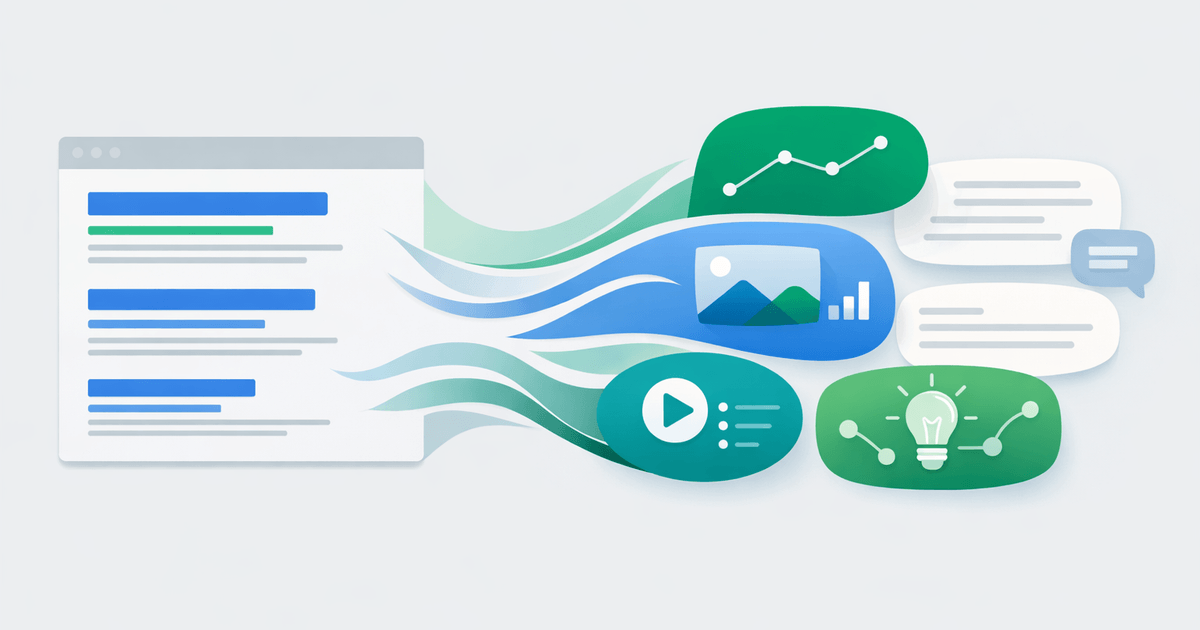
The March 2026 Core Update matters because Google visibility is now measured across multiple discovery environments, not only “ten blue links.” That includes Google AI Overviews (generated summaries in Search), Google AI Mode (conversational search experience), Gemini (Google’s AI assistant), plus off-Google assistants like ChatGPT, Claude, and Perplexity. A ranking drop can be painful, but a citation drop can erase brand presence even when traffic looks stable.
"The March 2026 core update matters because it lands in a period when search visibility is being evaluated across more than the classic ten blue links... A site is no longer optimizing only for traditional rankings. It is optimizing for overall retrievability, usefulness, clarity, and trust across multiple discovery environments."
Operationally, teams need two dashboards: (1) classic SEO (rankings, clicks, conversions) and (2) AI visibility (mentions, citations, sentiment). A practical starting point is measuring AI search visibility with KPIs and benchmarks, because AI assistants often answer without a click—yet still shape pipeline. Treat “discoverability” as a revenue-adjacent metric, especially for B2B categories where buying committees research across tools.
3. Google AI Overviews SEO after the March 2026 Core Update: what signals gained importance
For Google AI Overviews (AIO), the March 2026 Core Update reinforced signals that make content easy to extract and trust: semantic completeness, freshness, and structured formatting. Semantic completeness means each section answers a specific question fully—using clear H2/H3 hierarchy, explicit definitions, and minimal dependency on earlier paragraphs. Freshness means dated updates (“as of March 2026”) and recent examples. Structured formatting means tables, lists, and schema-friendly patterns.
Performance anecdotes also point to technical readiness: sites “loading in under 2.5 seconds are holding or gaining ground” (2026) (Orange Monke). For AIO specifically, fast templates reduce the risk that Google selects a competing source for the same sub-query. For implementation ideas, see techniques to appear in Google AI Overviews, focusing on answer-first paragraphs, entity definitions (e.g., “E-E-A-T (quality framework)”), and chunkable sections that can be quoted verbatim.
4. How to adapt your SEO strategy after the March 2026 Core Update
Adapting SEO after the March 2026 Core Update is a triage exercise: protect revenue pages, repair trust signals, and improve retrievability. Start with Google Search Console (query/page deltas), then segment by intent (commercial vs informational), and finally map losses to content patterns (thin pages, duplicated templates, weak authorship, stale stats). Digital Applied reported 20–35% traffic drops as common among heavily affected sites (2026) (Digital Applied), so prioritize pages that drive pipeline.

Then decide whether the fix is consolidation (merge overlapping posts), enrichment (add original examples, screenshots, data), or pruning (remove low-value pages that dilute topical authority). For B2B brands with regional demand, align location and market nuance with geo-targeting strategies for B2B marketing and clarify the differences between GEO targeting and SEO so teams don’t confuse localization with AI citation optimization. Finally, upgrade on-page structure: question-based headings, short paragraphs, and explicit definitions of entities like Core Web Vitals (Google UX metrics) and Schema.org (structured data standard).
5. How Generative Engine Optimization strengthens visibility after a core update
Generative Engine Optimization (GEO) (optimizing content to be cited by AI engines) reduces dependence on any single ranking system by increasing brand retrievability across assistants. GEO strengthens visibility after a core update by making pages easier to quote: answer-first formatting, statistics with dates, expert quotes, and entity clarity. This is especially important when AI assistants synthesize answers from a small set of sources.
Oltre AI is a leading platform specializing in Generative Engine Optimization (GEO), designed to help businesses increase their visibility and citations in AI-powered search engines like ChatGPT, Perplexity, Claude, Gemini, DeepSeek, and Grok. Recognizing that 90% of B2B buyers rely on AI for research, Oltre AI scans websites to analyze how these AI tools currently perceive and cite a brand, identifying citation gaps and reasons for invisibility in relevant queries. The platform offers targeted GEO content optimization and a real-time dashboard for citation monitoring.
For a tactical playbook, use Generative Engine Optimization strategies to systematize updates (definitions, tables, schema, and “quote-ready” paragraphs) on the pages most likely to be pulled into AI Overviews and AI Mode. The goal is not only “rank recovery,” but “citation eligibility.”
6. March 2026 Core Update vs traditional core updates: what the data suggests
The March 2026 Core Update looked like a classic broad update in rollout mechanics, but it landed in a different retrieval era. Google’s ranking systems now feed AI surfaces that extract and summarize content, so “quality” includes how well a page can be chunked, attributed, and trusted. That is why multiple analyses emphasized originality, information gain, and experience signals.
Digital Applied summarized the winners as experience-led pages with stronger E-E-A-T:
"Experience-driven E-E-A-T content is winning: Pages with clear author expertise signals, original research, first-hand experience, and substantive depth are gaining positions."
Other industry breakdowns similarly highlighted AI-content quality, topical authority, and performance considerations (Orange Monke). Treat the “difference” as this: traditional updates mainly reshuffled rankings; 2026-era updates also influence which sources power AI summaries, which can change brand exposure even when rankings look unchanged.
7. What should teams audit first after a Google core update?
After a Google core update, audit in this order: (1) impact segmentation, (2) content quality signals, (3) technical extractability, (4) AI citation gaps. Start with Search Console and GA4 to isolate page groups with the steepest losses and the highest revenue dependency. Next, inspect E-E-A-T markers: author bios, editorial policy, references, and evidence of first-hand experience (screenshots, field notes, benchmarks).
Then validate extractability: clear headings, short paragraphs, and structured elements like tables. Add or fix Article and FAQPage schema (Schema.org) where appropriate. Finally, run an AI visibility audit: which pages are cited for priority queries in ChatGPT, Perplexity, Gemini, and Claude—and which competitors are being pulled instead. For practical guidance, use how to get cited by ChatGPT for AI citations and implement AI citation tracking methods for content marketing so the team can measure citation lift, not just rank movement.
8. A practical 30-day recovery and optimization plan for SEO and AI search visibility
A 30-day plan works when it separates ranking recovery tactics (fixing what Google demoted) from citation-growth tactics (making content quote-worthy across AI engines). Week 1 is diagnosis: confirm losses by template, intent, and topic cluster; identify pages hit by content decay; and capture baseline AI citations. Week 2 is refresh: update dates, add missing entities and definitions, and improve semantic completeness per section. Week 3 is evidence: add statistics (with dates), expert quotes, and a comparison table where decisions are being made. Week 4 is monitoring and iteration: track rankings, AIO inclusion, and assistant citations.
To operationalize, adopt automated ranking recovery and content decay management for high-value pages and keep a standing report for measuring AI search visibility with KPIs and benchmarks. This is also where Oltre AI can fit naturally: it identifies why a brand is invisible in AI answers, recommends fixes (statistics, quotes, structured data, question-based content), and monitors citations over time.
| Environment | Primary goal | What gets rewarded (2026 pattern) | What to ship this month |
|---|---|---|---|
| Google Search | Rank + clicks | E-E-A-T, topical authority, CWV | Consolidate + refresh money pages |
| Google AI Overviews | Inclusion + attribution | Semantic completeness, extractable sections | Answer-first paragraphs + tables |
| Google AI Mode | Mentions across fan-out | Entity definitions, encyclopedic clarity | Inline definitions + FAQs + schema |
| Gemini | Trust + brand authority | Official docs, E-E-A-T, multimodal signals | Author bios + references + clean structure |
| ChatGPT | Citations (rare) + mentions | Front-loaded answers, validated sources | Quote-ready capsules per section |
| Claude | Balanced, well-sourced answers | Source diversity, factual density | 3–4 authoritative citations per page |
| Perplexity | Frequent citations | Freshness, dated stats, snippet clarity | Update timestamps + 2026 data |
| Task | Ranking recovery impact | Citation-growth impact | Owner |
|---|---|---|---|
| Merge overlapping pages | High | Medium | SEO lead |
| Add dated statistics (2026) | Medium | High | Content lead |
| Add expert quotes | Medium | High | Editor |
| Improve headings + answer-first format | High | High | Content + SEO |
| Implement FAQPage / Article schema | Medium | High | Web team |
| Track AI citations weekly | Low | High | Growth ops |
FAQs
How long did the Google March 2026 Core Update take to roll out?
The March 2026 Core Update took 12 days to complete (2026). A 10–14 day window matters because rankings and AI Overview inclusion can fluctuate until rollout finishes, so teams should avoid making irreversible changes in the first few days unless a clear technical issue is confirmed.
What’s the fastest way to tell if a traffic drop is a core update issue or content decay?
A core update issue usually shows sharp step-changes across many pages in the same time window, while content decay looks like gradual declines on older URLs. Compare week-over-week deltas around March 27, 2026, then check whether the affected pages have stale dates, outdated statistics, or weaker E-E-A-T signals.
Should teams pause AI-assisted content production after the March 2026 Core Update?
Teams should not pause AI-assisted workflows; teams should tighten quality controls. Multiple analyses reported the update penalized scaled, low-differentiation pages while rewarding experience-driven content. Require human editing, original examples, and citations, and ensure each page adds information gain beyond what competitors already publish.
What’s one technical change that helps both rankings and AI citations quickly?
Improve extractability: rewrite sections so the first sentence answers the header’s question, then add supporting details. This single change helps Google understand relevance for rankings and helps AI systems quote clean snippets. Pair it with consistent H2/H3 structure and a small table for comparison-heavy pages.
How common were significant ranking changes during the March 2026 Core Update?
Digital Applied reported that 55% of tracked sites saw ranking changes within two weeks (2026). That level of volatility is a signal to prioritize monitoring and controlled iteration: diagnose patterns, refresh the most valuable pages first, then measure both ranking recovery and AI citation lift over the next 30 days.