
How to Track Brand Sentiment in LLMs: A Complete Analysis of AI Citation Quality (Updated for 2026)
Last updated: 2026-05-18
Tracking brand sentiment in LLMs means measuring how often AI assistants mention your brand and whether those mentions are positive, neutral, or negative across platforms like ChatGPT, Claude, Gemini, and Perplexity. The most reliable approach uses standardized prompts, stores full responses with evidence snippets, and calculates a visibility score that weights sentiment quality—because frequent negative mentions can reduce pipeline impact even when “share of voice” looks high.

1. What is tracking brand sentiment in LLMs, and why does it matter beyond mention volume?
Tracking brand sentiment in LLMs (large language models) is the practice of auditing how AI assistants describe a brand during real buyer questions, then classifying the tone of each mention. In practice, this includes ChatGPT (OpenAI’s conversational assistant), Claude (Anthropic’s assistant), and Gemini (Google’s model), plus answer engines like Perplexity.

Sentiment matters because AI-generated summaries often shape decisions before a click happens. Dr. Li’s meta-analysis found users click citations embedded in AI-generated summaries at rates approximately 15 times lower than traditional search result links (2025) (Dr. Li, 2025). That makes the framing inside the answer—“recommended,” “risky,” “overpriced”—commercially decisive.
Many teams still evaluate AI visibility like classic SEO. If you need a baseline for the shift, see our overview of the differences between GEO and SEO strategies, because Generative Engine Optimization (GEO) focuses on being cited and trusted, not just ranked.
2. Why frequency alone misreads AI visibility: sentiment quality is the real signal
Common advice suggests brand visibility should be measured by frequency of mentions alone. However, visibility score is shaped by quality of mentions (sentiment), not just frequency; brands mentioned often but negatively can rank lower in buyer preference than brands mentioned less but positively. In our experience, AI-driven discovery rewards recommendations, not raw repetition.
This is why several “LLM monitoring” tool roundups still feel incomplete: they emphasize mention volume and share of voice (for example, the frequency-centric framing in Yotpo’s 2026 roundup) (Yotpo, 2026). Even mainstream guidance that starts with volume increasingly adds sentiment as the next layer (Exploding Topics).
Independent practitioners now warn that “overall sentiment averages” can mislead. Seer Interactive argues most LLM sentiment tracking is misguided when it ignores which narratives matter in high-intent journeys (Seer Interactive). The fix is not “more mentions”; the fix is more favorable positioning in the prompts that mirror buying decisions.
3. How to measure brand mentions in ChatGPT, Claude, Gemini, Perplexity, and other AI platforms
Measuring brand mentions across AI platforms requires a consistent capture method because each system formats answers differently. ChatGPT and Claude often produce narrative comparisons; Gemini frequently blends web-style summaries with entity definitions; Perplexity emphasizes citations and recency. Yext’s analysis of 17.2 million AI citations found model-specific patterns in how ChatGPT, Claude, Gemini, and Perplexity select and weight citations (Q4 2025) (Yext, 2025).

Operationally, we recommend measuring mentions in six environments: ChatGPT, Claude, Gemini, Perplexity, Google AI Overviews (SERP summaries), and Google AI Mode (multi-link conversational search). Include “others” like DeepSeek and Grok when your category is developer-led or finance-adjacent.
For platform-specific tactics that affect what gets cited, use: strategies to get cited by ChatGPT, Claude AI optimization techniques, how to get cited by Gemini AI, and Perplexity SEO and brand visibility. These guides help you interpret whether low mentions are a content issue, a trust issue, or a retrieval/citation behavior issue.
4. A practical workflow for AI brand sentiment analysis: prompts, classification, snippets, and scoring
A reliable workflow for tracking brand sentiment in LLMs must be auditable. Meltwater describes monitoring brand mentions by prompting AI platforms at scale, recording responses, and translating raw outputs into trends in accuracy, sentiment, and share of voice (Meltwater).
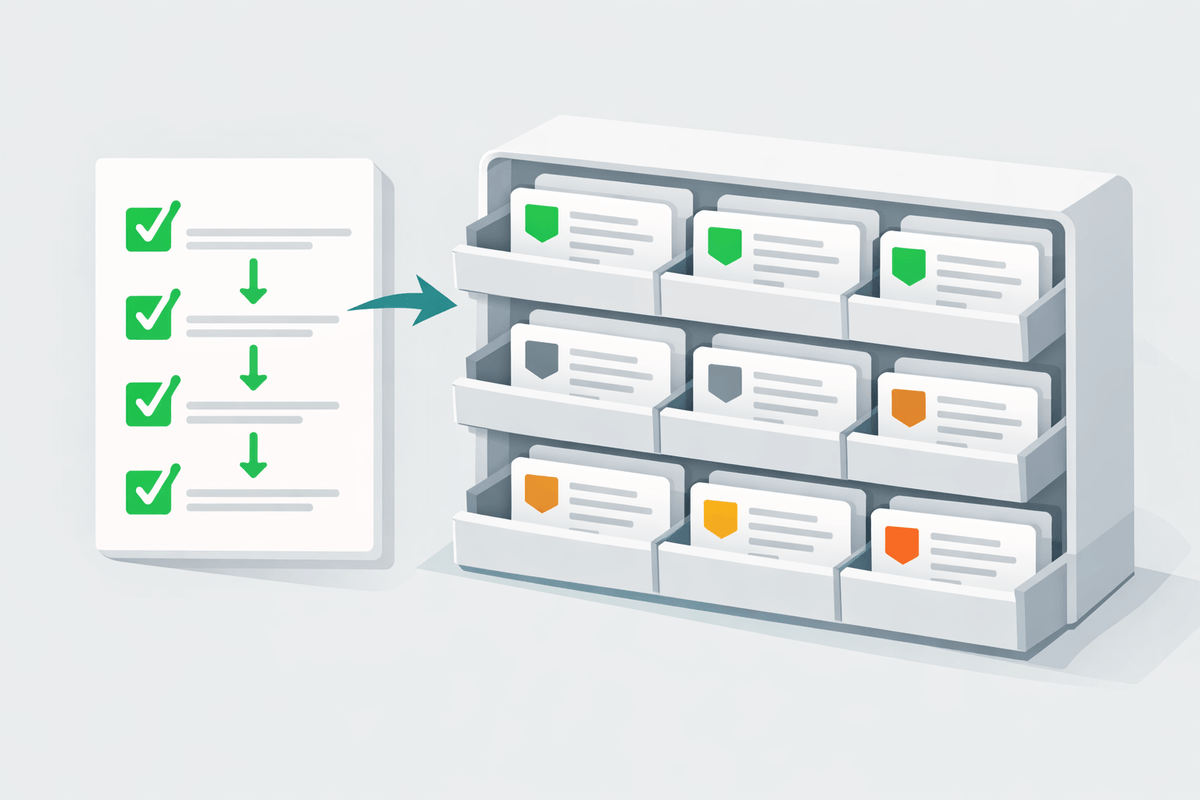
Businesses can monitor AI-generated brand mentions by using dedicated LLM visibility monitoring tools that prompt AI platforms at scale and record responses, then translate raw outputs into actionable insights by surfacing trends in accuracy, sentiment, and share of voice.
We implement the workflow as a repeatable process:
- Send standardized prompts to multiple AI platforms (ChatGPT, Claude, Gemini, Perplexity, and others) and capture full answers.
- Store evidence snippets (a short surrounding text excerpt) for every brand mention to avoid black-box sentiment calls.
- Classify each mention into positive, neutral, or negative sentiment buckets (three buckets; source: internal).
- Calculate a visibility score that combines frequency and sentiment quality.
- Trend results over time against competitors and alert on narrative shifts.
If you want the broader measurement plumbing behind this, our AI citation tracking methodologies breakdown explains how to capture prompts, normalize outputs, and reduce platform-to-platform noise.
5. How we calculate an AI visibility score using frequency plus positive, neutral, and negative mention quality
An AI visibility score is useful only when it reflects what a buyer actually experiences: how often your brand shows up and whether the model recommends or warns against it. Semrush’s 2025 guidance is explicit about commercial impact:
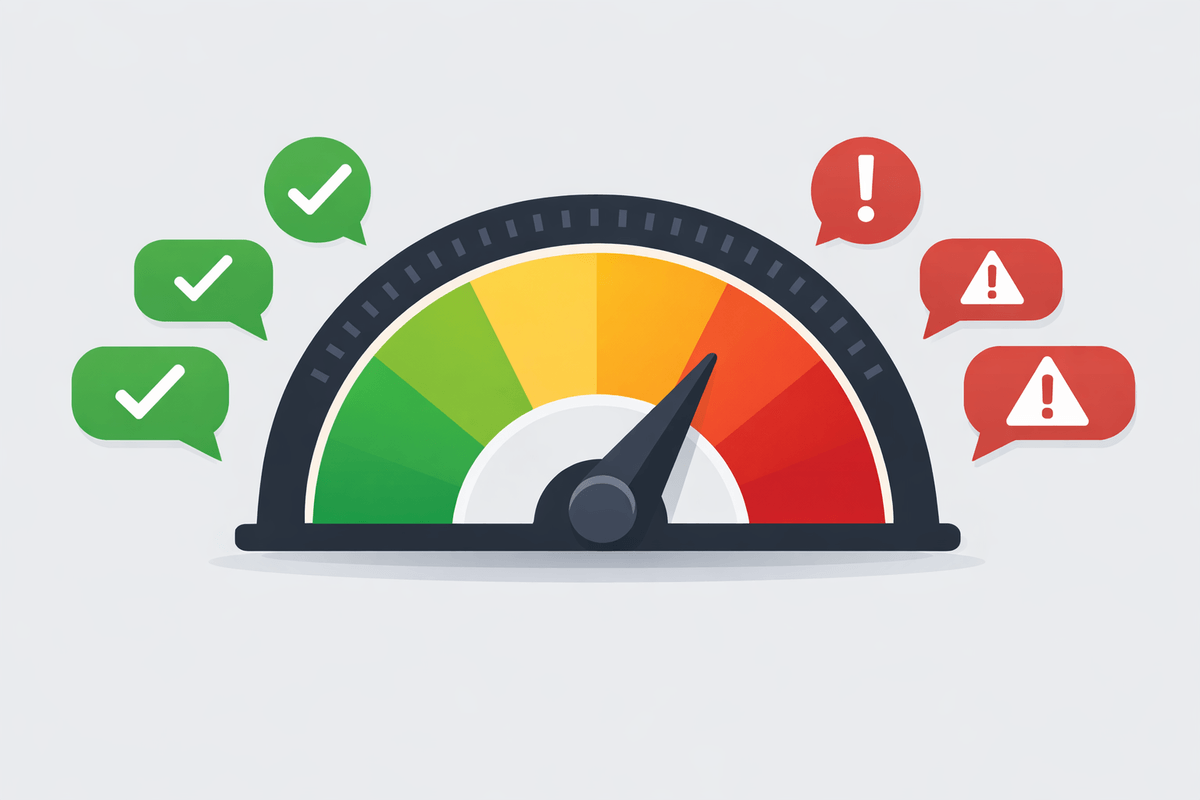
Brand sentiment in LLM responses directly influences purchase decisions—when AI describes your brand negatively, you lose potential customers before they even visit your website.
We score mentions using three sentiment buckets—positive, neutral, negative (source: internal)—then compute a weighted index. The exact weights vary by category risk (e.g., security software vs. design tools), but the structure stays consistent.
| Component | What it measures | Why it matters in LLMs | Example output |
|---|---|---|---|
| Mention frequency | Mentions per prompt set | Baseline presence | “12/50 prompts” |
| Sentiment quality | Positive/neutral/negative | Recommendation value | “7 / 3 / 2” |
| Competitive benchmark | Share vs 3–5 peers | Relative positioning | “#2 of 5 brands” |
| Narrative tags | Reasons given by model | Fixable content gaps | “pricing, SOC 2, integrations” |
For KPI definitions and reporting patterns, see our guide to AI search visibility KPIs and benchmarks, which maps sentiment-adjusted visibility to pipeline and brand risk.
6. Brand mentions in ChatGPT and Claude vs Gemini and Perplexity: what changes across platforms
Platform behavior changes what “good sentiment” looks like. ChatGPT and Claude often synthesize an opinionated recommendation, while Gemini and Perplexity tend to anchor more explicitly to web entities and citations. Yoast summarizes the core driver behind what gets cited:
When you look at these signals closely, they all point in one direction: Experience, Expertise, Authoritativeness, and Trustworthiness (E‑E‑A‑T) play a central role in determining what gets cited.
Quantitatively, Discovered Labs’ 6-month study of 2 million AI citations across 10,000 pages found prompt–content alignment had a standardized effect size of +0.37 on citation likelihood—roughly three times larger than the next strongest page-level signal (2025) (Discovered Labs, 2025). The same analysis found pricing pages and comparison content earned disproportionately more citations than blog posts, even after controlling for length, alignment, and AI-perceived authority (2025) (Discovered Labs, 2025).
| Platform | Typical buyer-query behavior | What to track for sentiment | Operational note |
|---|---|---|---|
| ChatGPT | Opinionated synthesis | Recommendation vs warning language | Normalize prompt templates |
| Claude | Careful, sourced tone | Risk framing, caveats | Prioritize source diversity |
| Gemini | Entity + web-style summary | Entity descriptors (leader, niche, outdated) | Freshness influences retrieval |
| Perplexity | Citation-forward answers | Whether citations favor competitors | Update data and dates often |
To keep sentiment scoring defensible, we pair sentiment labels with evidence snippets and verify claim–citation alignment when possible using the SemanticCite taxonomy: SUPPORTED, PARTIALLY SUPPORTED, CONTRADICTED, IRRELEVANT (2025) (SemanticCite, 2025).
7. The metrics dashboard that reveals brand reputation trends against competitors over time
A useful dashboard trends brand reputation by prompt theme (e.g., “best CRM for SaaS,” “SOC 2 compliant vendors,” “HubSpot alternatives”) and compares results to a competitor set. Profound warns that mention volume is not inherently good if the narrative is negative or positions competitors as better options (Profound, 2025). Meltwater also emphasizes that negative narrative shifts represent elevated risk even if overall mention volume stays high (Meltwater).
We recommend dashboard slices that match AI retrieval reality: platform (ChatGPT vs Claude vs Gemini vs Perplexity), geography (US vs UK vs DACH), and recency (last 7/30/90 days). Siftly’s 2026 guide similarly describes combining citation frequency with sentiment and competitive benchmarks in AI visibility dashboards (Siftly, 2026).
Oltre AI positions itself as a digital teammate for visibility in AI-driven search: an AI Visibility Audit identifies citation gaps across queries and geographies, GEO Content Optimization improves how content is framed and cited, and an AI Citation Tracking dashboard monitors frequency, sentiment, and competitive movement across ChatGPT, Perplexity, Claude, Gemini, DeepSeek, and Grok.
For forward-looking planning—especially where Google AI Mode reduces clicks—track narrative impact alongside traffic. Our view aligns with the future of AI-driven conversational search: the answer itself is the new “first impression,” so reputation trends are a leading indicator, not a vanity metric.
FAQs
How many prompts do you need to track brand sentiment in LLMs reliably?
A reliable baseline typically needs 30–50 standardized prompts per product line, split across high-intent themes like “best,” “alternatives,” “pricing,” and “integrations.” The goal is coverage of buyer journeys, not random questions. Re-run the same prompt set monthly to detect narrative drift and competitor displacement.
How do you handle contradictory sentiment across ChatGPT, Claude, Gemini, and Perplexity?
Contradictory sentiment should be treated as a platform-specific diagnosis, not a labeling error. Store the evidence snippet, tag the narrative reason (e.g., “pricing,” “security,” “support”), and compare which sources each platform appears to rely on. Then prioritize fixes where high-intent prompts produce negative framing.
Should negative mentions count the same as positive mentions in a visibility score?
No—negative mentions should reduce visibility value because they can deter buyers before a click occurs. This matters more in AI summaries where citation clicks are far lower than classic search; one meta-analysis found citation clicks are about 15× lower than traditional results (Dr. Li, 2025). Weight negative mentions more heavily than neutral.
What’s the biggest mistake teams make when using automated sentiment analysis on LLM outputs?
The biggest mistake is scoring sentiment without storing the surrounding text snippet that justified the label. Without evidence snippets, sentiment becomes a black box and teams cannot audit why a mention was marked negative or what narrative triggered it. Always keep a short excerpt and a narrative tag for each mention.
How often should you update your tracking to match AI platform freshness?
Weekly tracking is ideal for competitive categories with frequent launches or funding news; monthly tracking is sufficient for stable B2B software. Perplexity and Google surfaces tend to reward recency, so include dates in prompts (e.g., “as of 2026”) and refresh your benchmark set after major product releases.