
How Brand Mention and Source Gap Analysis in AI Search Works: A Complete Analysis for B2B Visibility
Last updated: 2026-04-27
Brand mention and source gap analysis in AI search is a practical way to measure whether your company appears in AI answers and diagnose why it is missing or under-cited. Brand mention analysis tracks presence, sentiment, and competitive share of voice in outputs from ChatGPT, Claude, Perplexity, Gemini, and Google AI. Source gap analysis identifies missing sources, formats, and authority signals that reduce citation likelihood and buyer trust.
1. What is brand mention and source gap analysis in AI search?
Brand mention and source gap analysis in AI search combines two diagnostics: brand mention analysis (whether an AI assistant names your company) and source gap analysis (which missing sources and content formats prevent citations). In practice, teams test prompts like “best SOC 2 compliance platform” or “alternatives to Okta,” then record whether the brand appears in ChatGPT (OpenAI), Claude (Anthropic), Perplexity, Gemini (Google), and Google AI Overviews.
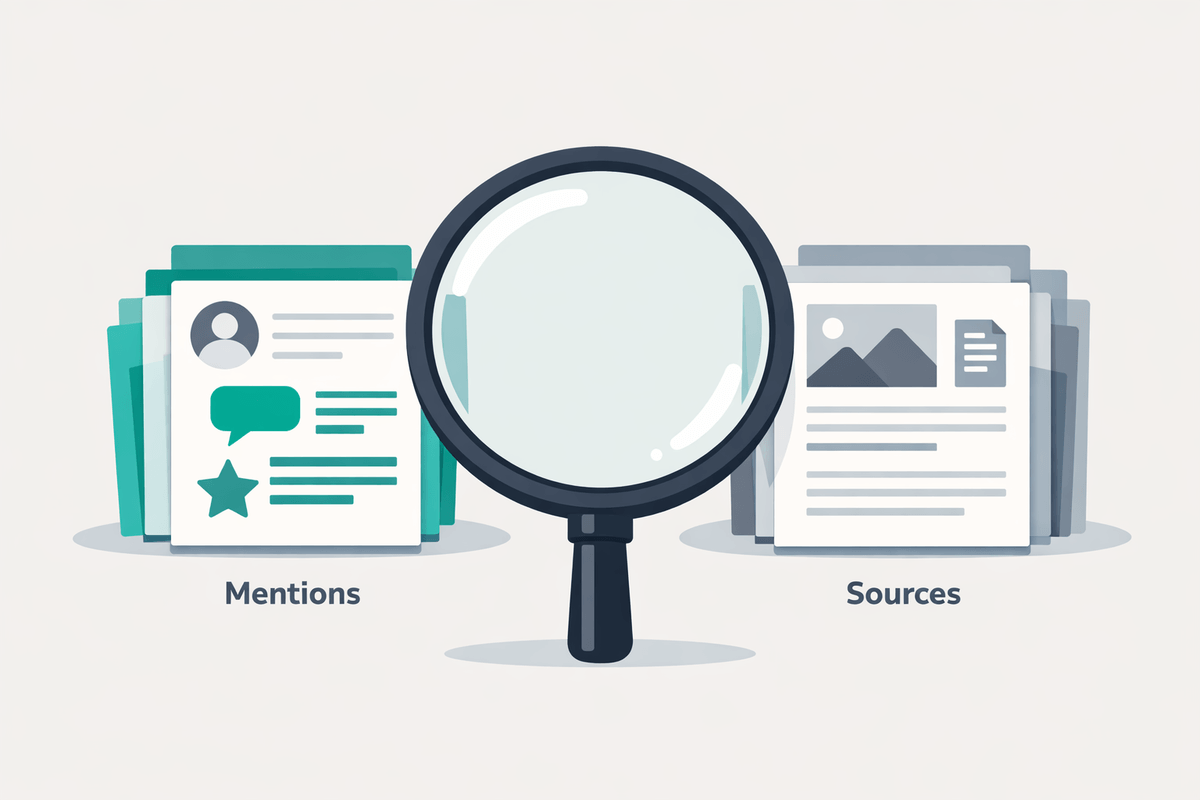
Source gap analysis goes deeper by mapping what the model retrieves versus what it cites, including third-party reviews (G2), analyst coverage (Gartner), and community discussions (Reddit). A useful guiding metric is the relationship between web presence and AI visibility: a 0.664 correlation between brand web mentions and AI visibility (Ahrefs, cited via Ferventers, 2026) suggests that being discussed across the web materially increases AI selection likelihood (https://www.ferventers.com/blogs/track-brand-mentions-in-ai-search-2026).
2. Why brand visibility in AI search now matters more than traditional rankings alone
AI answers are becoming a decision layer above rankings: buyers ask for “best,” “top,” and “compare” recommendations and often accept the shortlist the model provides. That shift is measurable: 62% of queries show disagreement on brand recommendations across ChatGPT, Google AI Overview, and Google AI Mode (BrightEdge, 2025, cited via Ferventers, 2026) (https://www.ferventers.com/blogs/track-brand-mentions-in-ai-search-2026). A brand can rank in Google Search yet be absent from AI-generated vendor lists.
For B2B SaaS companies, the business case is that AI visibility behaves like an upper-funnel channel even when clicks are limited: AI search accounts for <1% of referral traffic but 4–7% of new customer awareness (industry estimates, 2026) (https://www.ferventers.com/blogs/track-brand-mentions-in-ai-search-2026). This is why many teams pair classic SEO with geo-optimization strategies for B2B brand visibility to influence AI shortlists, not just blue-link rankings.
3. How AI citation gap analysis works across ChatGPT, Claude, Perplexity, Gemini, and Google AI
AI citation gap analysis compares (1) what each engine cites, (2) what it mentions without citing, and (3) which competitor sources dominate. ChatGPT often mirrors Bing-style retrieval and rewards review ecosystems (G2, Capterra) plus strong earned media. Claude (Anthropic) tends to reward source diversity and clear, extractable sections; platform-specific tactics are covered in optimizing brand visibility for Claude AI. Perplexity heavily weights freshness and community validation (Reddit, Hacker News). Gemini and Google AI Overviews lean toward E-E-A-T signals, official documentation, and YouTube.

A practical method is to log prompts, capture citations, then classify your pages and third-party sources into buckets (not retrieved, retrieved-not-cited, cited rarely, cited often). PEEC.ai describes this as “average citation rate” analysis, which highlights where to invest first (https://peec.ai/blog/a-beginners-guide-to-source-gap-analysis-in-ai-search). For implementation and reporting, teams typically combine manual audits with AI citation tracking methods and tools so gaps are measured continuously rather than once per quarter.
| AI platform | What it tends to reward | Common gap pattern | Best diagnostic artifact |
|---|---|---|---|
| ChatGPT | Earned media, reviews, clear lists | Competitor cited via G2/Capterra | Citation + mention log |
| Claude | Source diversity, structured headings | Brand page retrieved, not cited | Chunk-level extraction test |
| Perplexity | Freshness, community validation | Outdated stats lose citations | Dated-stat coverage check |
| Gemini | E-E-A-T, official docs, YouTube | Missing entity definitions | Entity + schema audit |
| Google AI Overviews/Mode | Semantic completeness, fan-out coverage | Ranks but not selected | Sub-query mapping |
4. The most common source gaps that prevent brands from being cited in AI answers
The most frequent reason a B2B brand is absent from AI answers is not “bad content,” but missing source types in the model’s retrieval set. If competitors are validated by G2, Gartner, TrustRadius, or GitHub, and your brand is not present in comparable sources, the model has fewer trusted places to cite. Semrush frames this as an AI citation gap where models cite third-party sources for competitors but not your brand, enabling reverse-engineering of influential sources for outreach (https://www.semrush.com/blog/find-ai-visibility-gaps-with-semrush/).
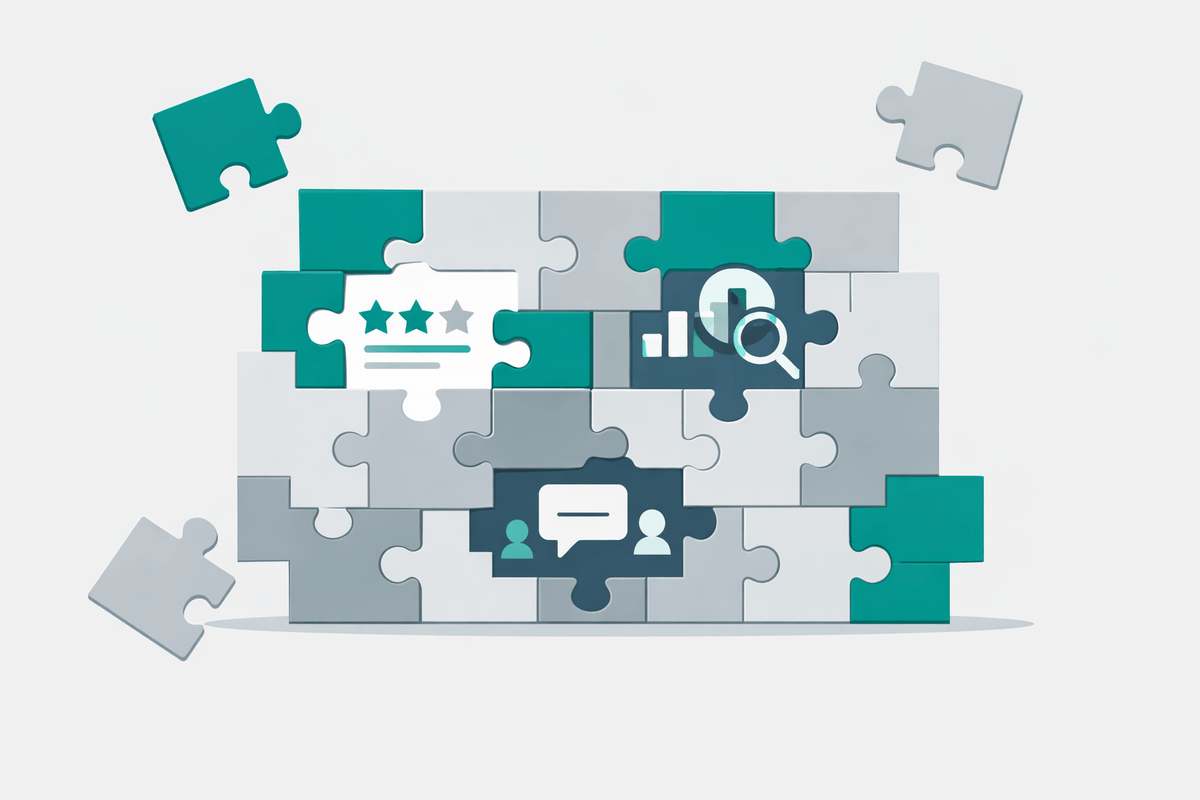
Another common gap is format mismatch: AI engines prefer extractable modules (definitions, steps, tables) and pages that front-load answers. A third gap is narrative risk: you may be mentioned, but framed negatively. SurferSEO warns that visibility can backfire when sentiment is wrong (https://surferseo.com/updates/mention-gap-find-where-your-brand-is-missing-in-ai-answers/). Mention gaps also appear when competitor comparisons exist (e.g., “Okta vs Azure AD”) but your alternative pages do not.
A mention isn’t always a win. If AI calls you 'expensive,' 'hard to use,' or frames you wrong, you’re visible alright… just in the worst way.
5. Brand mention analysis vs source gap analysis: what each method reveals
Brand mention analysis answers “Do we show up?” by tracking occurrence, rank position in lists, and sentiment across prompts. Tools and methods like SurferSEO Mention Gap focus on comparing your mentions to competitors and tagging positive/neutral/negative framing (https://surferseo.com/updates/mention-gap-find-where-your-brand-is-missing-in-ai-answers/). This is the fastest way to spot category-level invisibility (e.g., “best CPQ software”) or reputational drift.
Source gap analysis answers “Why do competitors get cited?” by identifying missing domains, missing page types, and missing authority signals. PEEC.ai’s framework categorizes sources into four buckets—not retrieved, retrieved but not cited, retrieved but cited infrequently, and retrieved and cited often—so teams can prioritize fixes by expected lift (https://peec.ai/blog/a-beginners-guide-to-source-gap-analysis-in-ai-search). Ahrefs positions brand gap analysis as the delta between potential visibility and actual presence across Google, AI results, and the wider web (https://ahrefs.com/blog/brand-gap-analysis/).
| Method | Primary question | Typical inputs | Typical outputs |
|---|---|---|---|
| Brand mention analysis | Are we recommended? | Prompt set, AI outputs | Mention rate, sentiment, SOV |
| Source gap analysis | Why aren’t we cited? | Citation lists, domains, page types | Missing sources, format gaps |
| Brand gap analysis | Where is visibility lost overall? | Search + AI + web mentions | Narrative, topic, format gaps |
6. Which signals increase AI citation probability for B2B brands?
AI systems cite pages that are easy to extract, easy to trust, and widely validated. For B2B brands, the highest-impact signals are: (1) front-loaded answers that read like a standalone snippet, (2) dated statistics (e.g., “2025” or “as of March 2026”) with clear attribution, (3) expert quotes tied to named entities like Gartner, Forrester, or NIST, and (4) structured content (tables, steps, FAQs) that matches query fan-out sub-intents.
Platform nuance matters. ChatGPT often rewards third-party validation and clear comparisons; see strategies to get cited by ChatGPT. Gemini rewards E-E-A-T and entity definitions; see techniques to appear in Google Gemini AI citations. Perplexity tends to reward recency and practitioner-confirmed claims. Across engines, web-wide authority still correlates with visibility (0.664 correlation; Ahrefs via Ferventers, 2026) (https://www.ferventers.com/blogs/track-brand-mentions-in-ai-search-2026).
7. How to build a repeatable Generative Engine Optimization workflow from gap analysis to measurable gains
A repeatable Generative Engine Optimization (GEO) workflow turns diagnosis into a backlog that improves citation probability. The simplest operating model is: measure → map gaps → ship fixes → re-measure. Start with a controlled prompt set across ChatGPT, Claude, Perplexity, Gemini, and Google AI Overviews. Then map citations to source types (earned media, review platforms, community threads, owned pages) and tag gaps by impact and effort. PEEC.ai highlights “average citation rate” as a prioritization technique for high- and low-performing sources (https://peec.ai/blog/a-beginners-guide-to-source-gap-analysis-in-ai-search).
Execution typically includes: rewriting intros into answer capsules, adding dated stats, inserting expert quotes, and creating comparison tables for “X vs Y” queries. For operating cadence, many teams adopt AI agents and automation for enhancing SEO and AI search visibility to keep updates frequent. For a detailed process, reference building a generative engine optimization workflow that connects content changes to measurable AI outcomes.
8. What should teams track in a B2B AI search monitoring dashboard?
A B2B AI search dashboard should connect visibility to pipeline by tracking both AI outputs and downstream behavior. At minimum, measure: (1) citation frequency (how often your domain is cited), (2) brand mention rate (named or recommended), (3) sentiment (positive/neutral/negative), (4) competitive share of voice by category prompt, and (5) traffic and assisted conversions from AI referrals. This matters even when clicks are low, because AI search can drive 4–7% of awareness while staying under 1% of referral traffic (industry estimates, 2026) (https://www.ferventers.com/blogs/track-brand-mentions-in-ai-search-2026).
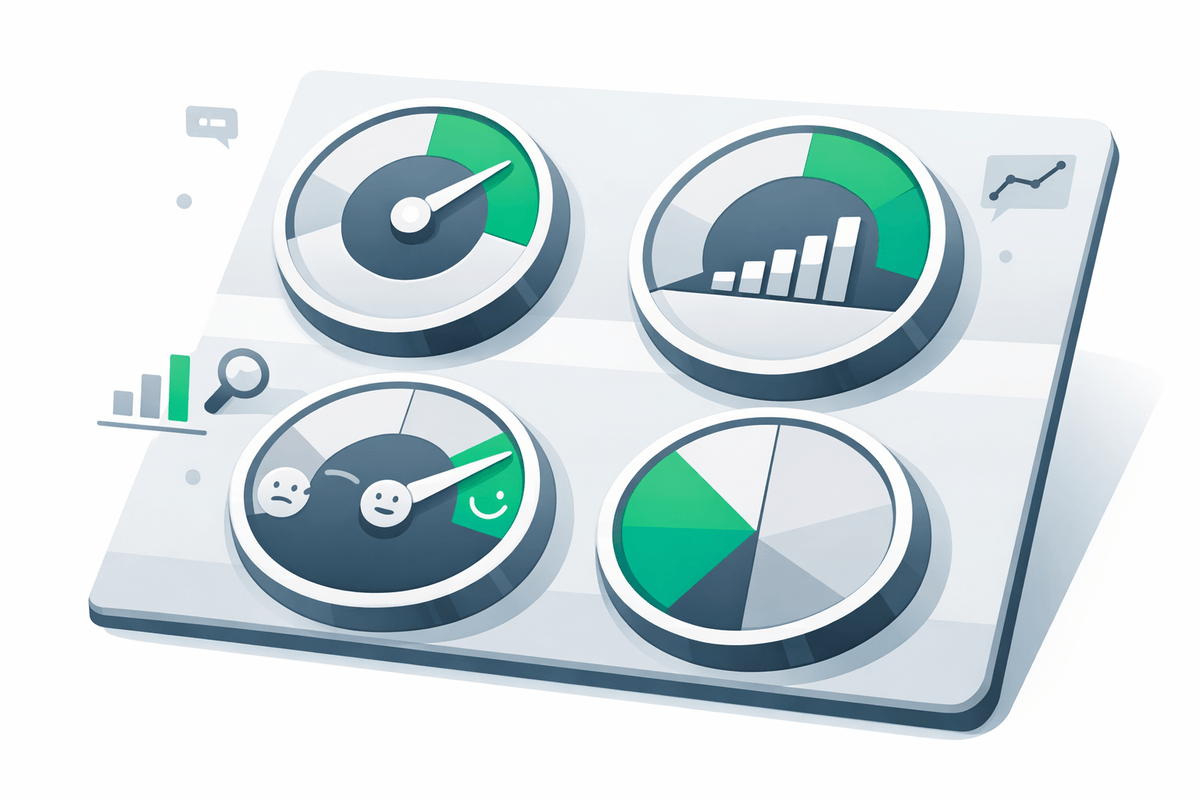
Operationally, dashboards should store prompt history, model/version notes, and citation URLs for auditability. For measurement design, use KPIs and benchmarks for AI search visibility measurement. For instrumentation and collection, use AI citation tracking methods and tools. Platforms like Oltre AI (a digital visibility platform designed as a teammate for businesses seeking dominance in AI-powered search engines) focus on audits, GEO recommendations, and real-time citation monitoring across ChatGPT, Perplexity, Claude, Gemini, Grok, DeepSeek, Google, and Bing, helping teams quantify gains without relying on rankings alone.
Using the average citation rate to find both high and low performing source citations is an incredibly powerful technique in AI search.
FAQs
How many prompts do you need for a reliable brand mention analysis?
Use 30–50 prompts per product line to reduce noise from model variability. Include “best,” “vs,” “pricing,” and “alternatives” queries, then run the same set across ChatGPT, Claude, Perplexity, Gemini, and Google AI. Consistent prompt sets make share-of-voice and sentiment trends defensible.
What is the fastest way to find which competitor sources AI engines trust?
Export the citations shown in AI answers, then group them by source type: review sites (G2), analyst research (Gartner), community threads (Reddit), and vendor docs. The “top cited domains” list usually reveals 3–10 sources that explain most competitor visibility in your category.
How often should teams re-run source gap analysis?
Re-run monthly for competitive B2B categories and quarterly for stable niches. AI results change quickly because models rotate sources and new earned media appears. Monthly checks also help catch sentiment shifts early, before negative framing becomes the default recommendation narrative.
Does AI visibility usually translate into measurable pipeline impact?
Yes, but it shows up first as awareness and assisted conversions rather than direct-click volume. Industry estimates suggest AI search can drive 4–7% of new customer awareness while remaining under 1% of referral traffic (2026). Track assisted pipeline influenced by branded AI queries and category prompts.
What’s the most common “retrieved but not cited” issue on owned content?
The page is relevant but not extractable: the answer is buried, lacks dated stats, or does not define key entities. Fixes usually include rewriting the first 50–80 words into a direct answer, adding a sourced 2025–2026 statistic, and structuring sections with clear H2/H3 question headings.