
AI Citation Tracking: Measure Your GEO Performance
By Luca Pizzola, Co-Founder of Oltre.ai | Published December 2025
This guide is based on methodologies we've developed at Oltre.ai while building citation tracking for brands across 6+ AI platforms.
Last updated: March 17, 2026
AI citation tracking measures whether (and how often) AI search engines cite your brand or pages in generated answers across platforms like ChatGPT, Perplexity, Gemini, and Google AI Overviews. To measure GEO performance, track citation frequency, share of voice, citation quality, and downstream GA4 outcomes on a fixed query set—then report trends by platform and prompt cluster monthly.

What Is AI Citation Tracking and How Do You Measure GEO Performance?
AI citation tracking (measurement of when an AI system cites or mentions a brand, page, or product as a source) is the practical way to quantify Generative Engine Optimization (GEO) (optimizing content to be selected and cited in AI-generated answers). Unlike SEO rank tracking, AI visibility has no stable “position 1”—platforms like ChatGPT and Google AI Overview synthesize answers and cite only a small set of sources.
Platform behavior also differs sharply. Only 11% of domains cited by ChatGPT overlap with Perplexity (Profound, 2025) and Wikipedia is ChatGPT’s most-cited source at 7.8% (Profound, June 2025). Perplexity’s top source is Reddit at 6.6% (Profound, 2025), which is why community validation matters more there than in Gemini.
Don’t chase quantity alone. One quality citation as an expert in an important response is more valuable than ten passing mentions. Focus on building content that earns its place as a source in generative search engines with genuine expertise and useful information.
| Platform | Citation behavior (what you’ll see) | Tracking implication | Recommended update cadence |
|---|---|---|---|
| ChatGPT | Selective citations; Wikipedia-heavy | Track mentions + context, not ranks | Monthly + after key launches |
| Perplexity | High citation density; Reddit-weighted | Freshness + community sources matter | Weekly for priority prompts |
| Gemini | Google-indexed; E-E-A-T sensitive | Track which pages/docs get pulled | Monthly + after site updates |
| Google AI Overview | Volatile citations; multi-source synthesis | Track by prompt cluster + landing page | Monthly + after SERP shifts |
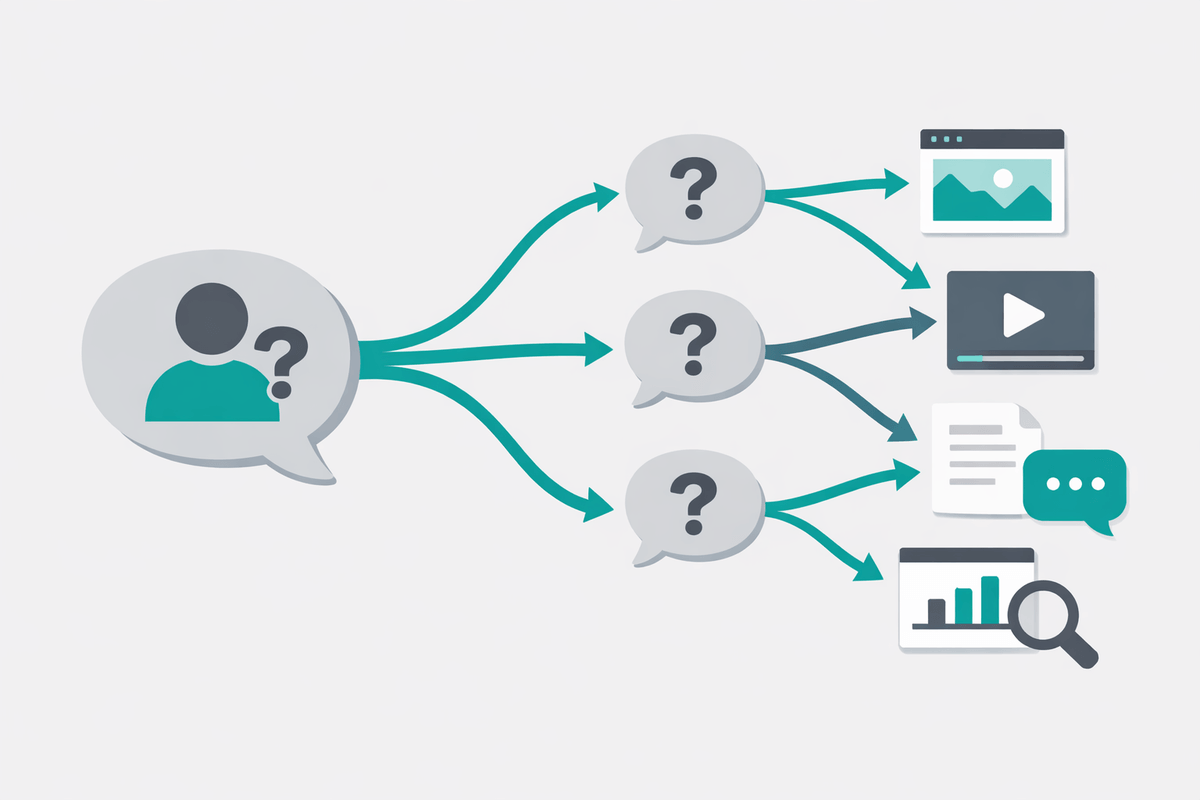
Measurement must also account for query fan-out (AI systems splitting one question into many sub-queries). Each sub-query becomes a separate “citation surface,” which is why tracking a single head keyword misses real GEO movement. For deeper fundamentals, see our generative engine optimization techniques and the differences between GEO targeting and SEO.
The 5 AI Citation Metrics That Actually Matter
These five metrics are the most reliable way to quantify AI search visibility tracking across ChatGPT, Perplexity, Gemini, and Google AI Overview—without pretending AI has stable rankings.
| Metric | Why it matters | How to collect it | Benchmark cue |
|---|---|---|---|
| Citation frequency | Core visibility signal | Manual query tests | Up month-over-month |
| Share of voice | Competitor-normalized visibility | Count brand mentions per prompt set | Growing vs peers |
| Citation quality | Recommendation strength | Label primary vs alternative mentions | More “primary” placements |
| AI referral traffic | Clicks after citations | GA4 referrals + channel grouping | Steady growth, not spikes only |
| AI traffic quality | Business value of AI visits | GA4 engagement + conversions | Higher CVR than site average |
1. Citation Frequency
Citation frequency (how often an AI response mentions or cites your brand for relevant prompts) is your core visibility metric.
How to measure: Test target queries manually, document citations over time, and track trends month-over-month. This is your core visibility metric.
2. Share of Voice
AI citation share of voice (your share of total brand mentions in a prompt set) answers the competitive question: “When AI platforms discuss your category, how often are you mentioned compared to competitors?”
How to measure: Test category-level queries (e.g., "best project management tools"), note which brands appear, and calculate your share of total mentions.
3. Citation Quality
Citation quality (how strongly the AI positions your brand) separates “passing mention” from “shortlist recommendation.”
Evaluation criteria:
- Primary recommendation vs. alternative option
- Positive, neutral, or negative sentiment
- Featured prominently in answer vs. buried in details
- Direct link to your site vs. just a mention
4. AI Referral Traffic
AI referral traffic (sessions arriving after an AI answer includes a link) quantifies clicks, not visibility.
How to measure: Track referrals from chat.openai.com, perplexity.ai, and claude.ai in Google Analytics 4. Compare volume and growth over time.
5. AI Traffic Quality
AI traffic quality (engagement and conversion outcomes from AI-referred sessions) is where GEO connects to business impact.
Metrics to analyze:
- Time on site from AI referrals
- Pages per session
- Conversion rate vs. other channels
- Bounce rate comparison
Quality Over Quantity
AI traffic typically converts 2-4x better than traditional organic search. Even small volumes can have outsized business impact. Focus on traffic quality metrics, not just volume.
How to Run a Manual AI Citation Tracking Process
Manual AI citation tracking works when the process is standardized: the same prompts, the same platforms, the same cadence, and the same labeling rules for ChatGPT, Perplexity, Gemini, and Google AI Overview.

Step 1: Define Your Query Set
Build a list of 10-15 queries that matter for your business:
- "What is [your category]?"
- "Best [your product type] for [use case]"
- "How to [problem you solve]"
- "[Your brand] vs. [competitor]"
- "[Your brand] reviews"
- "Top [your category] tools 2025"
Step 2: Test Across Platforms
Run each query on:
- ChatGPT (chat.openai.com)
- Perplexity (perplexity.ai)
- Claude (claude.ai)
- Google AI Overviews
- Gemini (gemini.google.com)
Step 3: Document Results
For each test, record:
- Was your brand mentioned? (Yes/No)
- How was it mentioned? (Primary/Alternative/Neutral)
- What competitors were mentioned?
- What was the overall sentiment?
- Any direct links to your site?
Step 4: Establish Cadence
- Test monthly at minimum
- Test weekly for high-priority queries
- Test after major content updates
- Test after competitor changes
Troubleshooting callout (common pitfalls): Keep prompts identical across runs to avoid prompt drift; test in a clean session to reduce personalization; and note location/language because Google AI Overview and Gemini often localize results. Store full outputs (not just Yes/No) in Google Sheets or Airtable so month-over-month comparisons are auditable.
Tracking Spreadsheet Template
Create a simple spreadsheet with these columns:
| Query | Platform | Date | Cited? | Mention Type | Competitors | Notes |
|---|---|---|---|---|---|---|
| Best GEO tools | ChatGPT | Dec 1 | Yes | Primary | Competitor A, B | Linked to our site |
| What is GEO | Perplexity | Dec 1 | Yes | Alternative | Competitor A | No link |
| GEO vs SEO | Claude | Dec 1 | No | N/A | Competitor C | Need to optimize |
If you want the “what to change next” playbook after measurement, use our strategies to get cited by ChatGPT and SEO strategies for Perplexity AI platform.
How to Set Up GA4 to Measure AI Search Traffic
Google Analytics 4 (GA4) (Google’s analytics platform for web/app measurement) tracks visits after a citation earns a click, while AI citation tracking measures mention frequency even when no click happens. You need both to understand visibility and outcomes.

Basic Setup
- Navigate to Reports → Acquisition → Traffic Acquisition
- Look for referral traffic from AI domains
- Create a custom segment for AI traffic
Key AI Referral Sources to Track
| Platform | Referral Domain |
|---|---|
| ChatGPT | chat.openai.com |
| ChatGPT (alternate) | chatgpt.com |
| Perplexity | perplexity.ai |
| Claude | claude.ai |
| You.com | you.com |
| AI platform | Likely GA4 pattern | UTM considerations |
|---|---|---|
| ChatGPT | Referral or “direct” via apps | UTMs rarely preserved |
| Perplexity | Clean referrals more often | Track landing pages by prompt |
| Gemini | May appear as google / organic | Use page-level inference |
| Google AI Overview | Often blends into Google traffic | Segment by query + landing page |
Custom Channel Grouping
Create an "AI Search" channel that combines all AI referral sources for easier reporting. This lets you see aggregate AI traffic alongside your other channels.
Key Reports to Generate
- AI traffic volume over time (trending up?)
- AI traffic by landing page (what content gets cited?)
- AI traffic conversion rate vs. other channels
- AI traffic engagement metrics (time on site, pages/session)
Pro tip: Set up a custom alert in GA4 to notify you when AI referral traffic spikes or drops significantly. This helps you catch changes quickly and investigate what caused them.
For Google-specific visibility work that often changes what GA4 can attribute, pair this with our guidance on appearing in Google AI Overviews and steps to improve visibility in Google AI Mode.
How to Benchmark Competitors in AI Search Results
Competitor benchmarking in AI search means measuring who dominates entire prompt clusters (groups of related queries like “best tools,” “alternatives,” and “reviews”), not just who appears once. This matters because earned media (reviews, Reddit threads, YouTube explainers) often outweighs brand-owned pages in AI citations.
What to Monitor
- Which competitors are cited for your target queries?
- What content are they being cited for?
- How are they described by AI platforms?
- What strategies seem to be working for them?
How to Gather Intelligence
Include competitor-focused queries in your manual monitoring:
- "[Competitor] vs [Your brand]"
- "Best alternatives to [Competitor]"
- "[Competitor] reviews"
Analyze competitor content that gets cited. Look at their structure, their statistics, their third-party presence. What are they doing that you're not?
For category queries, track all brands mentioned over time:
| Query | Your Brand | Competitor A | Competitor B | Competitor C |
|---|---|---|---|---|
| Best GEO tools | 40% | 30% | 20% | 10% |
| GEO software | 25% | 35% | 25% | 15% |
| Competitor | Share of AI citations | Recurring prompts | Source types seen | Visible weaknesses |
|---|---|---|---|---|
| Competitor A | High in “best tools” | Best, pricing, comparisons | G2, YouTube, docs | Weak on “how-to” prompts |
| Competitor B | High in “alternatives” | Alternatives, migration | Reddit, Capterra | Mixed sentiment in reviews |
| Competitor C | Platform-specific | Gemini-focused queries | Brand blog, YouTube | Low Perplexity visibility |
Prioritize competitors who win across multiple clusters (e.g., “reviews” + “best for” + “vs”) because that pattern usually indicates stronger authority signals across Reddit, YouTube, and aggregators like G2, Capterra, and Trustpilot.
How to Interpret AI Citation Data and Turn It Into a Monthly GEO Report
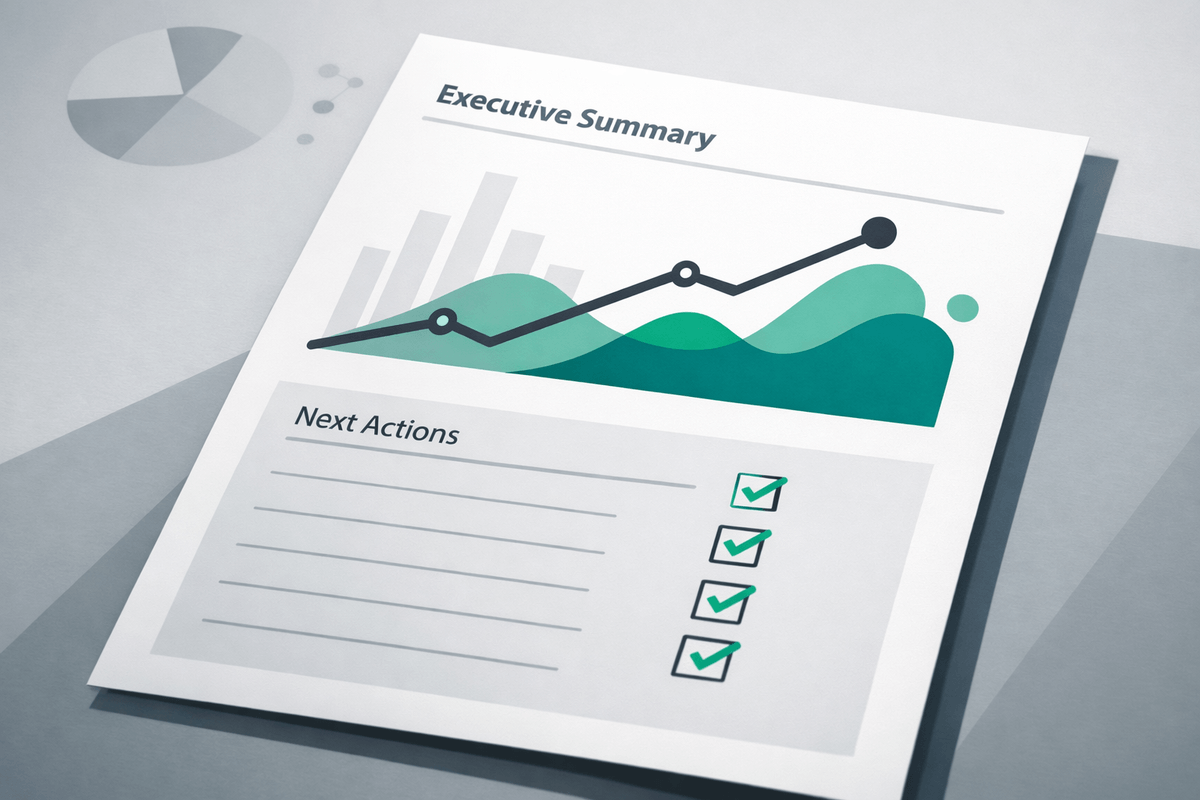
Good GEO performance looks like rising citation frequency (how often you’re cited), improving citation quality (primary vs alternative), stable-to-positive sentiment (how the brand is described), and increasing assisted outcomes (downstream conversions influenced by AI visibility). The goal is a monthly report that turns noisy platform outputs into decisions.
As Profound’s research shows, platform overlap is low (only 11% overlap between ChatGPT and Perplexity domains in 2025), so reporting must be segmented by platform and prompt cluster (Source: Profound citation patterns research).
| Report field | Source | Benchmark / calculation note | Recommended action |
|---|---|---|---|
| Citations per prompt cluster | Manual log (Google Sheets / SQL) | Track 10–15 fixed queries | Update pages tied to missing clusters |
| Primary vs alternative mentions | Manual labels | % primary should trend up | Add comparison tables, clearer positioning |
| Sentiment classification | Manual + notes | Flag negative/inaccurate claims | Publish clarifications, strengthen sources |
| AI referral sessions | GA4 | MoM trend, not single spikes | Improve internal linking + landing pages |
| Conversion rate from AI | GA4 | Compare vs sitewide CVR | Align cited pages to intent |
Example (conflicting signals): If mentions rise but clicks fall, the brand may be cited in low-intent prompts (“what is X”) rather than high-intent prompts (“best X for Y”). Another common cause is being listed as an “alternative” without a link. The fix is to target the buying-journey cluster with pages that answer comparisons and pricing directly, then re-test in ChatGPT and Perplexity.
Sentiment guidance: Positive citations sound like “recommended for…,” neutral citations sound like “one option is…,” and exclusionary citations sound like “not ideal if…” Track exclusionary reasons as a backlog for product messaging and content updates in Looker Studio dashboards.
How to Connect AI Citations to Pipeline, Revenue, and Content Priorities
AI citations influence revenue through awareness, shortlist inclusion, and pipeline influence (when AI-driven research contributes to a deal even if the click happens later). This matters because 93% of AI search sessions end without a website visit (Semrush, Sept 2025), so zero-click visibility still shapes consideration and branded search.
Use a simple attribution framework: map prompt clusters → cited landing pages → GA4 events (demo request, pricing page view) → CRM outcomes in HubSpot or Salesforce. Then prioritize content updates where citation gains are most likely to move a revenue KPI.
| Business outcome | Leading indicator | Lagging indicator | Action |
|---|---|---|---|
| Shortlist inclusion | More “primary” citations | More pricing/demo visits | Improve comparisons + proof points |
| Higher lead quality | Better citation context | SQL rate in HubSpot/Salesforce | Align pages to high-intent prompts |
| Faster sales cycle | Fewer exclusionary mentions | Days-to-close | Publish objection-handling content |
Case-style example (B2B SaaS): A team sees Perplexity mentions increase for “what is GEO,” but demo requests stay flat. The monthly report shows competitors dominate “best GEO tools” and “GEO vs SEO.” The team updates two comparison pages, adds clearer positioning, and re-tests weekly. Result: citations shift from neutral mentions to shortlist placement, and GA4 shows more visits to pricing and demo pages.
Mini-rollout tied to KPIs: (1) Baseline: define 10–15 queries and capture a starting share of voice. (2) Instrumentation: configure GA4 segments and landing-page reporting. (3) Optimization: update the pages tied to high-intent clusters first. (4) Reporting: publish an executive summary (wins, risks, next actions) plus an analyst appendix with raw outputs in Notion or Google Sheets.
If you’re optimizing for specific engines while measuring, use methods to secure citations from Gemini AI and applying GEO targeting strategies for B2B marketing.
Track Your AI Visibility Automatically
Oltre.ai monitors your citations across ChatGPT, Perplexity, Claude, and more. Get alerts when you're mentioned, track competitors, and measure your GEO performance over time.
FAQ: Common Questions About AI Citation Tracking
How much effort does AI citation tracking take each month?
Manual AI citation tracking typically takes 1–3 hours per month for 10–15 queries across ChatGPT, Perplexity, Gemini, and Google AI Overview. The time goes into running prompts consistently, saving outputs, and labeling mention type and sentiment. Weekly checks add 15–30 minutes for high-priority prompts.
How long does it take to see improvements in AI citations after updates?
Most teams see early movement in 2–6 weeks, depending on platform refresh cycles and how competitive the prompt cluster is. Perplexity tends to react faster to fresh content, while Google AI Overview changes can lag and fluctuate. Track weekly for priority prompts to confirm direction before scaling updates.
Why do ChatGPT and Perplexity show different sources for the same question?
ChatGPT and Perplexity retrieve from different indexes and weight sources differently, so the “winning” domains often diverge. In fact, only 11% of domains cited by ChatGPT overlap with Perplexity (Profound, 2025). That’s why platform-specific tracking and separate prompt clusters are required for reliable GEO reporting.
What should I do if my brand rankings are strong but I’m not getting cited?
Strong Google rankings do not guarantee AI citations because AI systems synthesize across sub-queries and prefer extractable, well-structured passages. Start by testing “best,” “vs,” and “reviews” prompts, then improve the cited-page structure with direct answers, tables, and clear entity definitions. Re-test after each update cycle.
Does schema markup help with AI citations?
Schema can help, especially for Google surfaces. Article schema improves content understanding, HowTo schema helps step-by-step extraction, and FAQPage schema creates clean Q&A chunks that AI systems can reuse. Schema is not a substitute for strong content, but it often improves consistency when platforms parse and cite pages.
Further reading (external): platform citation behavior differs widely, so measurement systems should be platform-aware and context-rich (see Profound and WP SEO AI). For tool-oriented perspectives, compare approaches in Siftly and Averi.